raised in 2025, the first full year
Openstone Private markets, regulated funds
The whole infrastructure behind a private-markets offer.
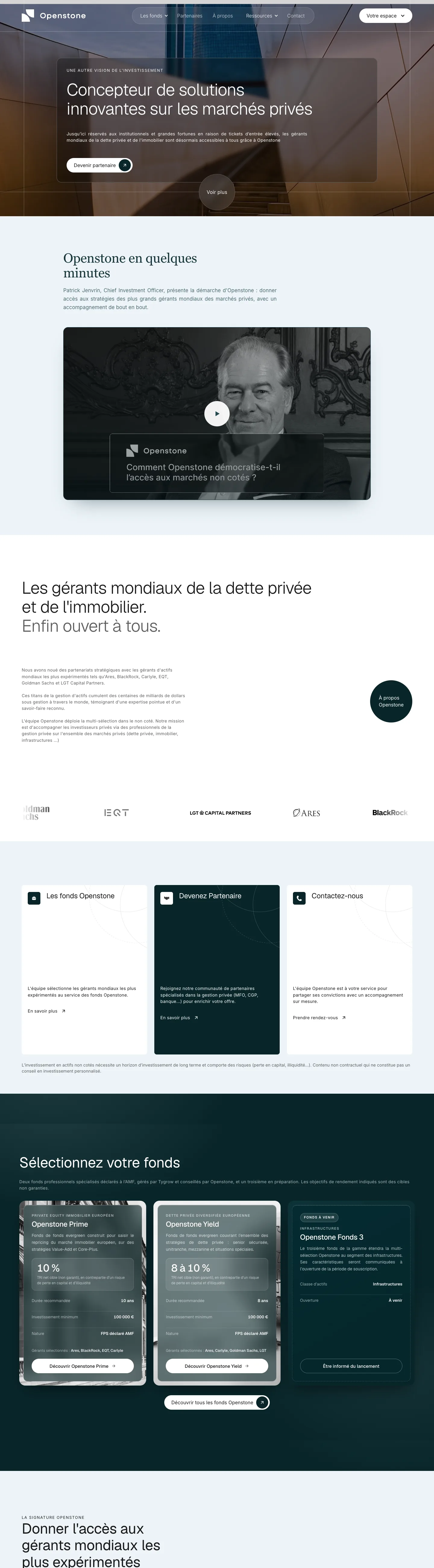
Openstone gives wealth advisors, family offices and private banks access to institutional real estate, private debt and infrastructure funds. We built everything that offer runs on: the platform advisors work in, the back office behind it, and what brings in and serves clients.
The situation
Institutional funds, distributed by advisors, with every step framed by the regulator and a team of a few people.
Private markets were sold on paper: subscription packs by email, signatures chased by hand, positions sent in spreadsheets, and advisors with no view of what their clients held. Each fund also depends on a fund administrator, life insurers and the software advisors use to consolidate their clients’ assets.
Openstone wanted to offer these funds to advisors, family offices and private banks without becoming a back office. That meant a platform they would choose to work in, data the market could trust, and processes that ran without the team carrying them.
Around the company
Private markets, regulated fundsOpenstone
Key actorWealth advisorsOne space to onboard clients, subscribe for them and follow positions, distributions and performance.
Key actorFamily officesSeveral institutional managers through one fund, with the reporting they expect.
Key actorPrivate banksTheir due diligence answered in writing, and data delivered in the format their systems read.
InvestorsIdentity, signature and payment in one flow; statements and documents online.
The fund administratorEach line matched to an investor automatically; a person confirms only the differences.
Aggregators and insurersPositions arrive in their systems every night, without anyone retyping them.
The regulatorEvery client checked before investing; every document carries the required warnings.
The teamLeads, operations, documents and reporting run on their own; the team reviews and decides.
What we decided
A few choices made the difference. Each one came with its reason.
- 01
Distribute through advisors.
Advisors already hold the client relationship and the duty to advise. Serving them well scales distribution without a retail acquisition budget.
- 02
Own the platform.
Owning the platform means owning the processes: any provider can be replaced without rebuilding, and advisors get one experience from first contact to the last report.
- 03
Exact figures for every investor.
Distributions, fees and valuations are calculated by the platform itself, to the cent, for every investor and every advisor. No spreadsheet in between, so no error reaches a client, and what partners send is checked against it.
- 04
Grow without growing the back office.
Landing pages, fund reports, presentations and newsletters are produced automatically from the figures, in the company’s own identity and with the required warnings. Onboarding, fees and invoicing run the same way. The team reviews and decides; it no longer assembles.
What changed, actor by actor
| Actor | Before | After |
|---|---|---|
| Wealth advisors | Paper subscriptions, no view of their clients’ positions, data re-keyed into their own tools. | One space to onboard clients, subscribe for them and follow positions, distributions and performance. |
| Family offices | Institutional managers reachable one fund at a time, each with its own paperwork. | Several institutional managers through one fund, with the reporting they expect. |
| Private banks | A new product meant a new integration and a long due diligence. | Their due diligence answered in writing, and data delivered in the format their systems read. |
| Investors | Forms, signatures by post, statements by email. | Identity, signature and payment in one flow; statements and documents online. |
| The fund administrator | Its files reconciled by hand against the platform. | Each line matched to an investor automatically; a person confirms only the differences. |
| Aggregators and insurers | Positions missing or typed in again. | Positions arrive in their systems every night, without anyone retyping them. |
| The regulator | Compliance resting on people remembering each step. | Every client checked before investing; every document carries the required warnings. |
| The team | A handful of people facing every task by hand. | Leads, operations, documents and reporting run on their own; the team reviews and decides. |
The work
Own the platform.
Web app
Distribute through advisors.
Documents

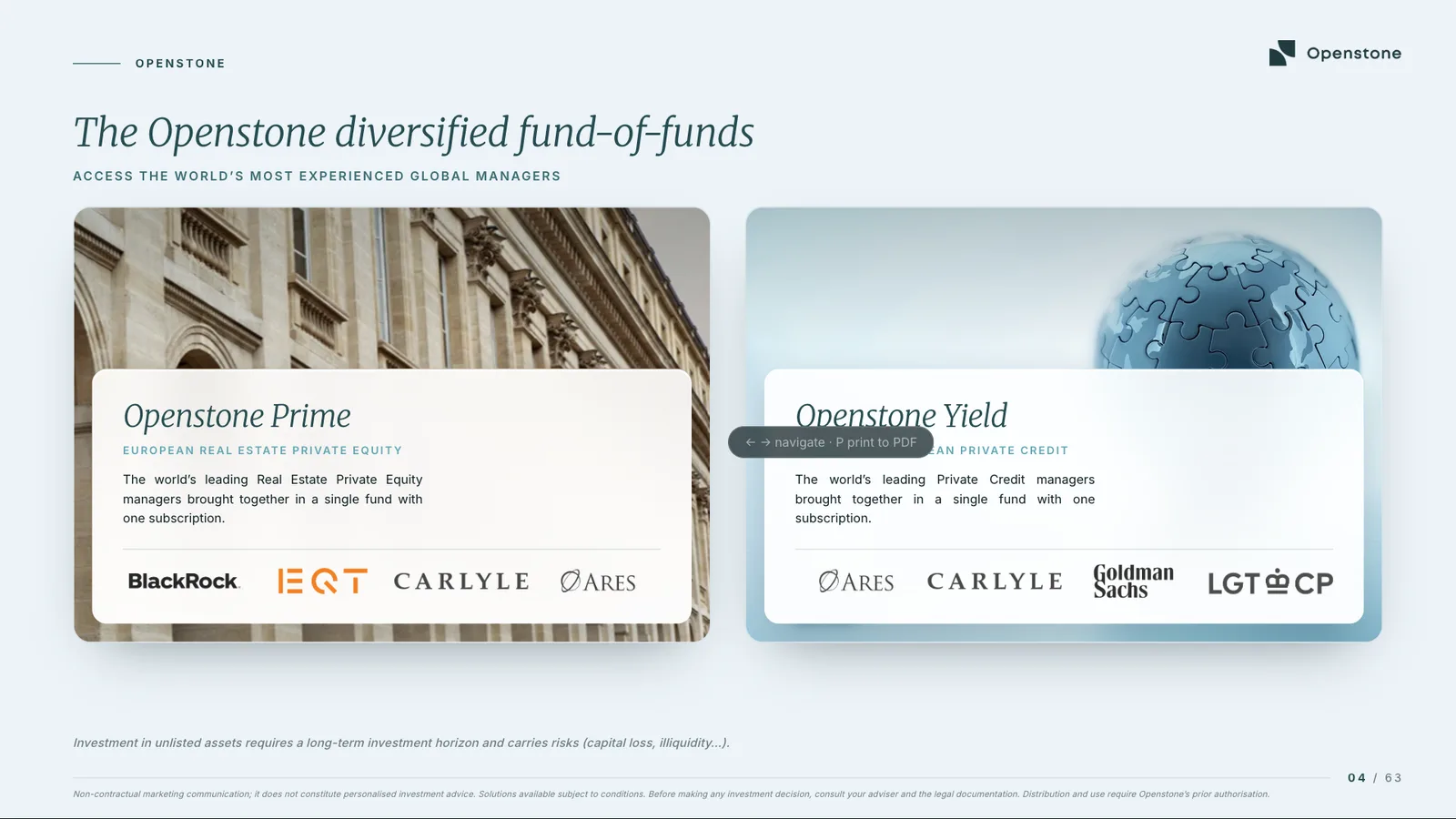

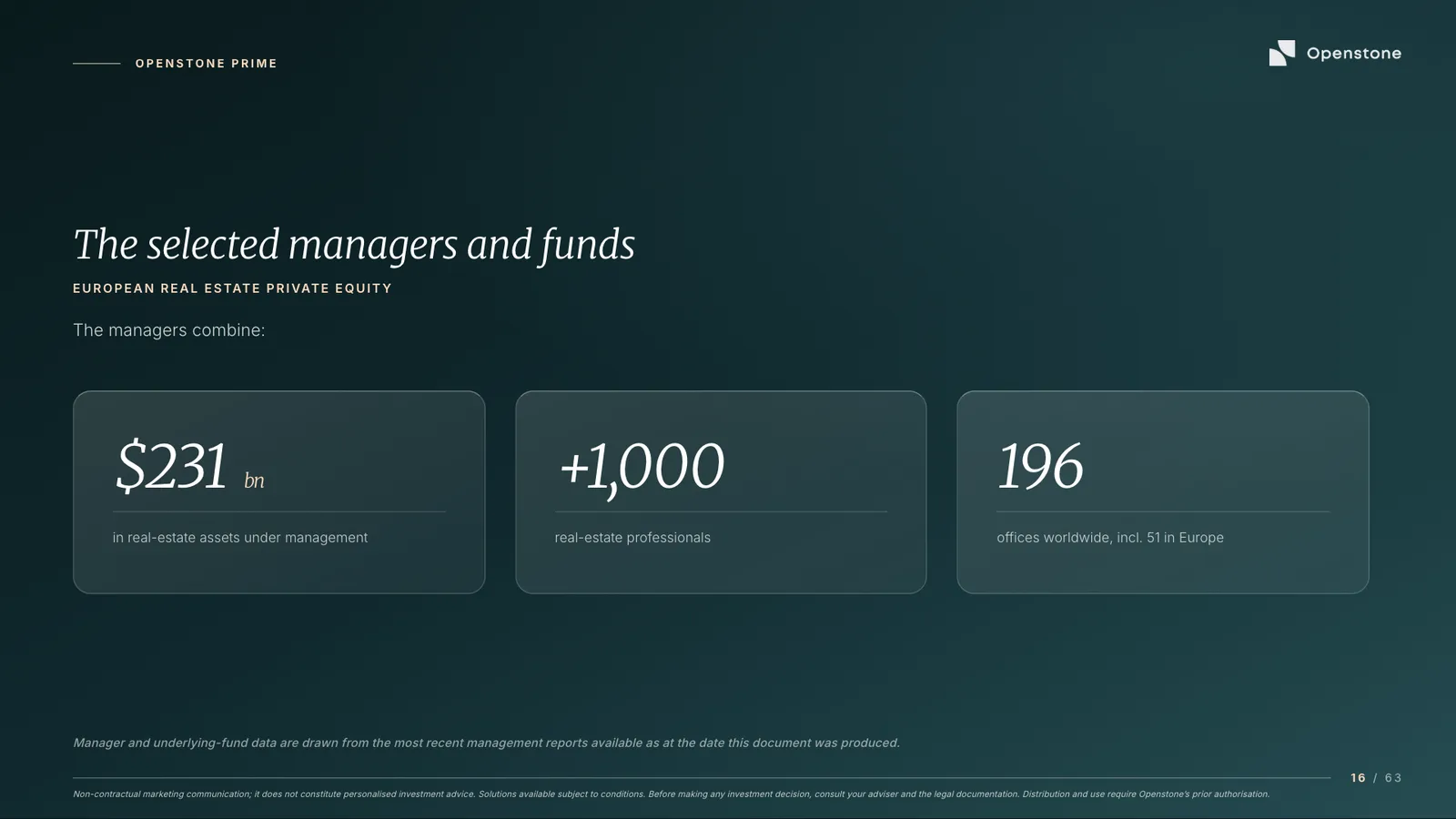
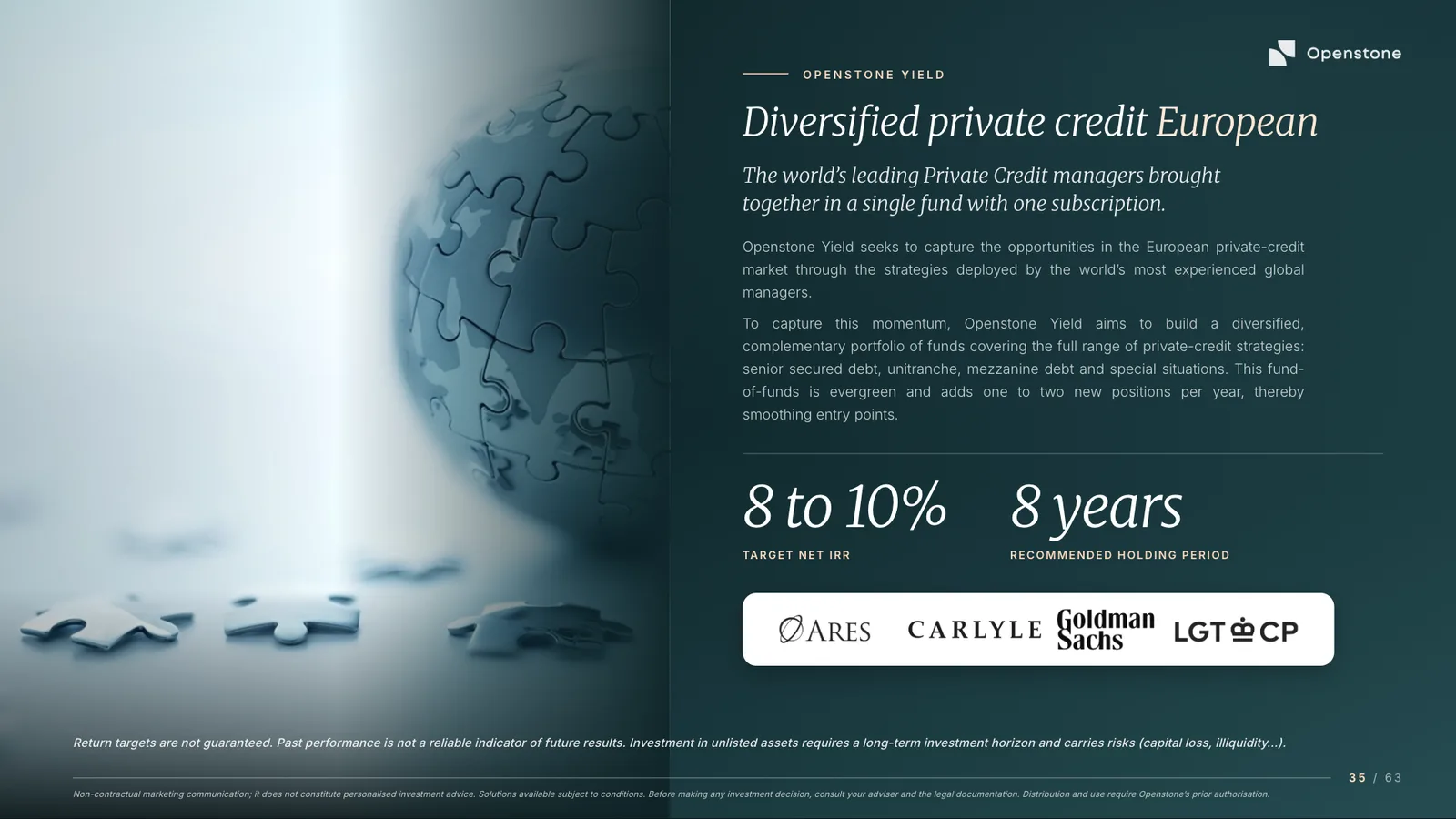
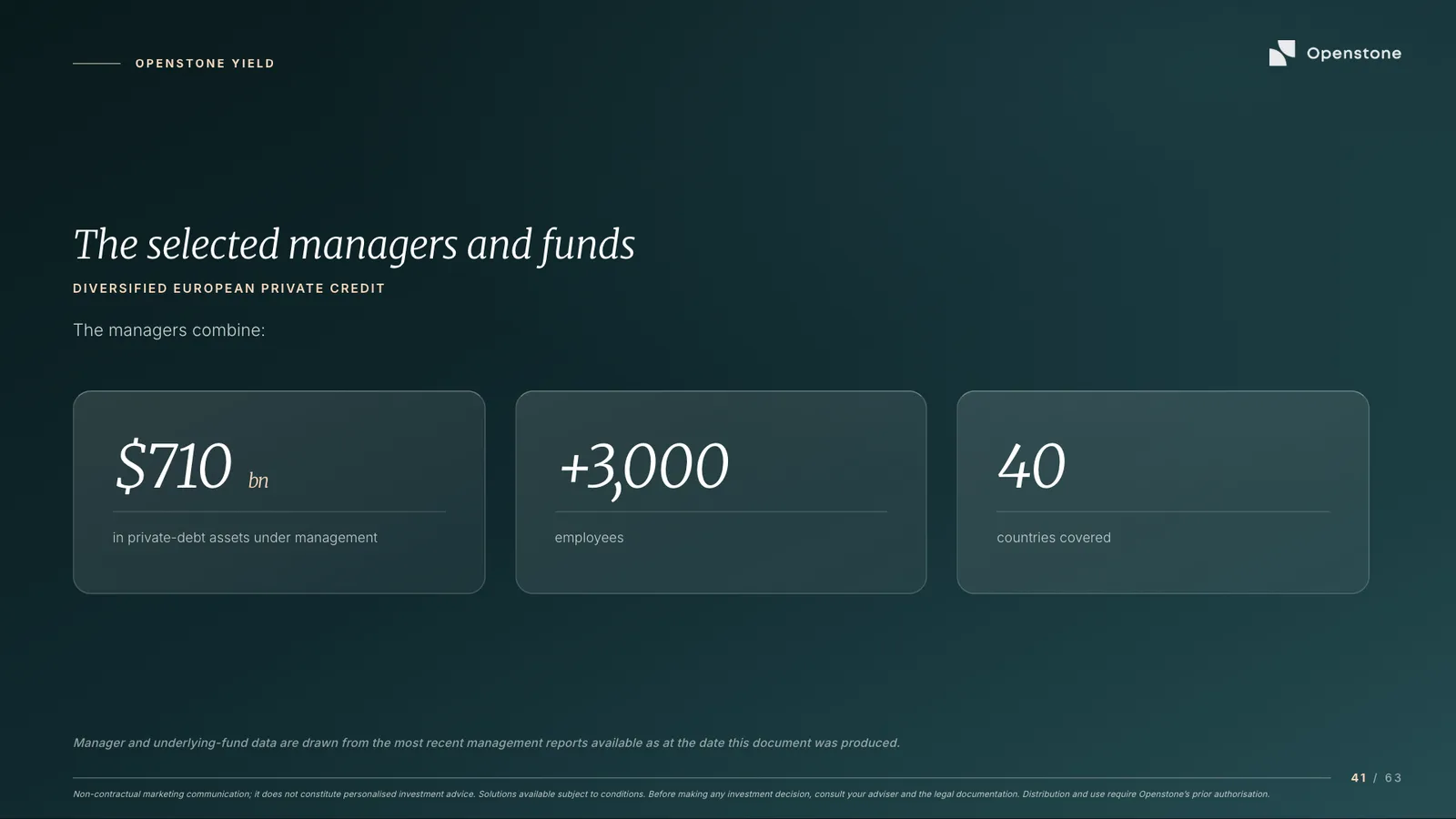
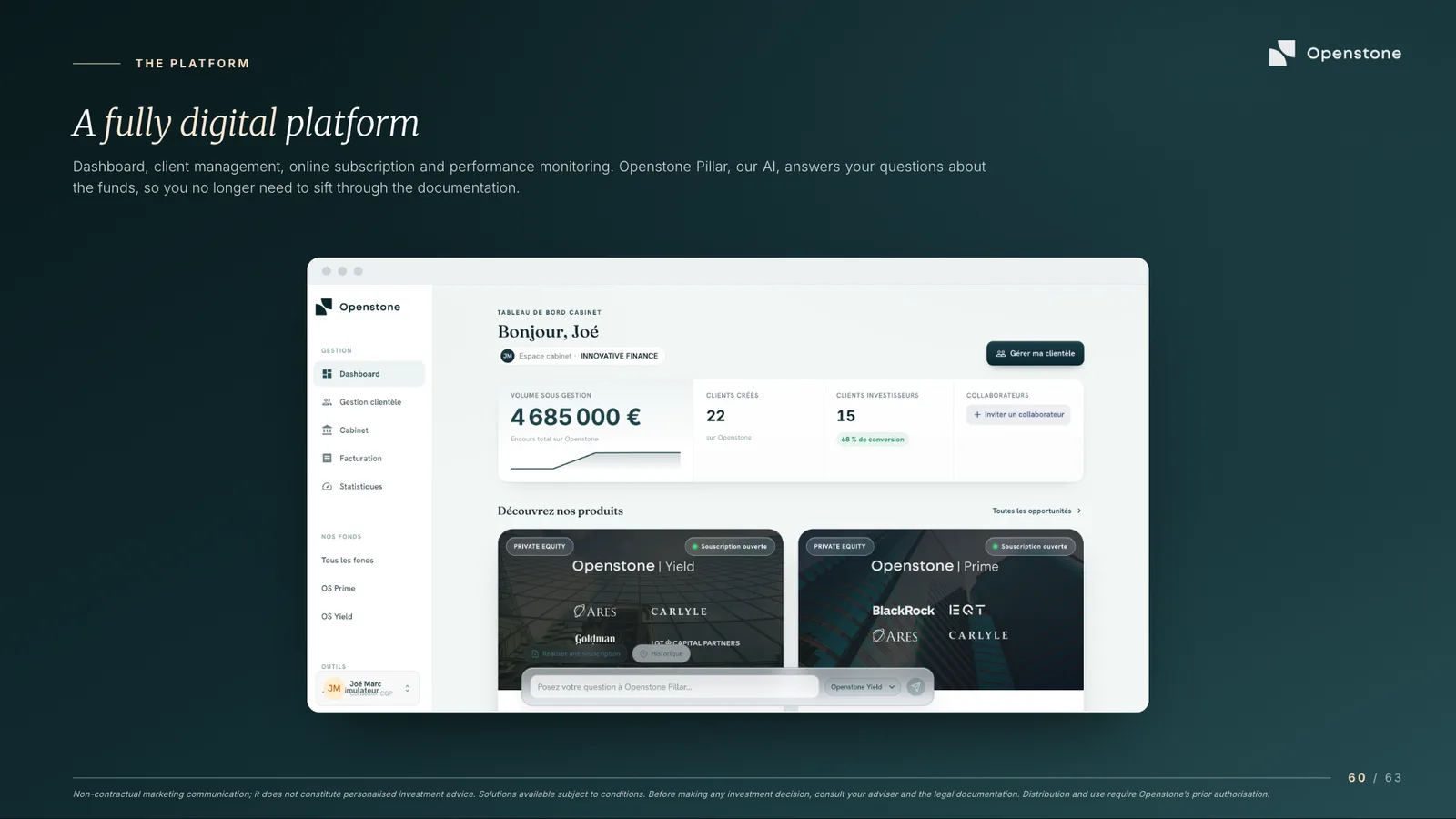

Real deliverables. Figures and personal data removed or replaced.
How it runs
What now runs on its own, and the detail behind each decision.
ProductThe advisor space
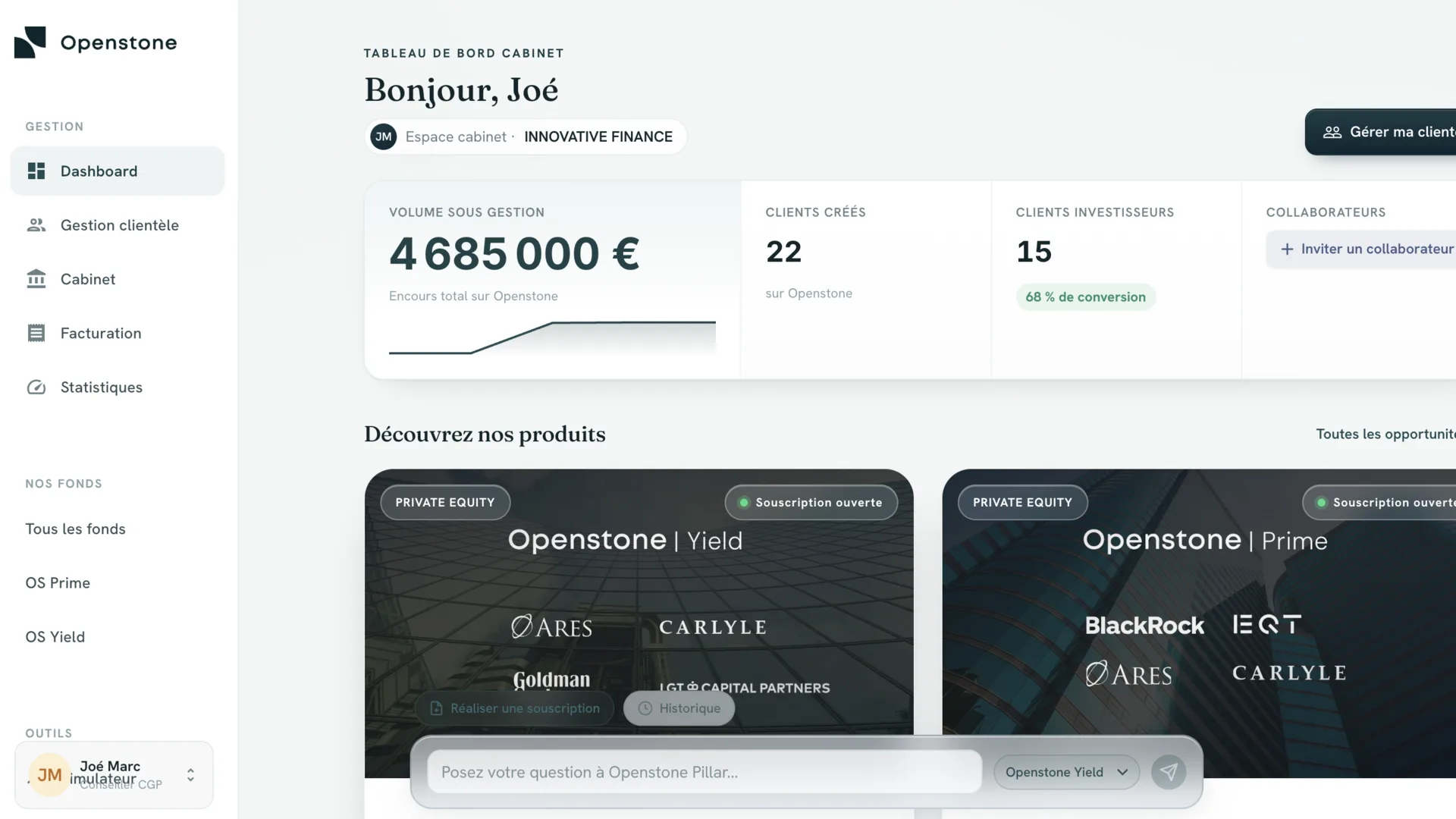
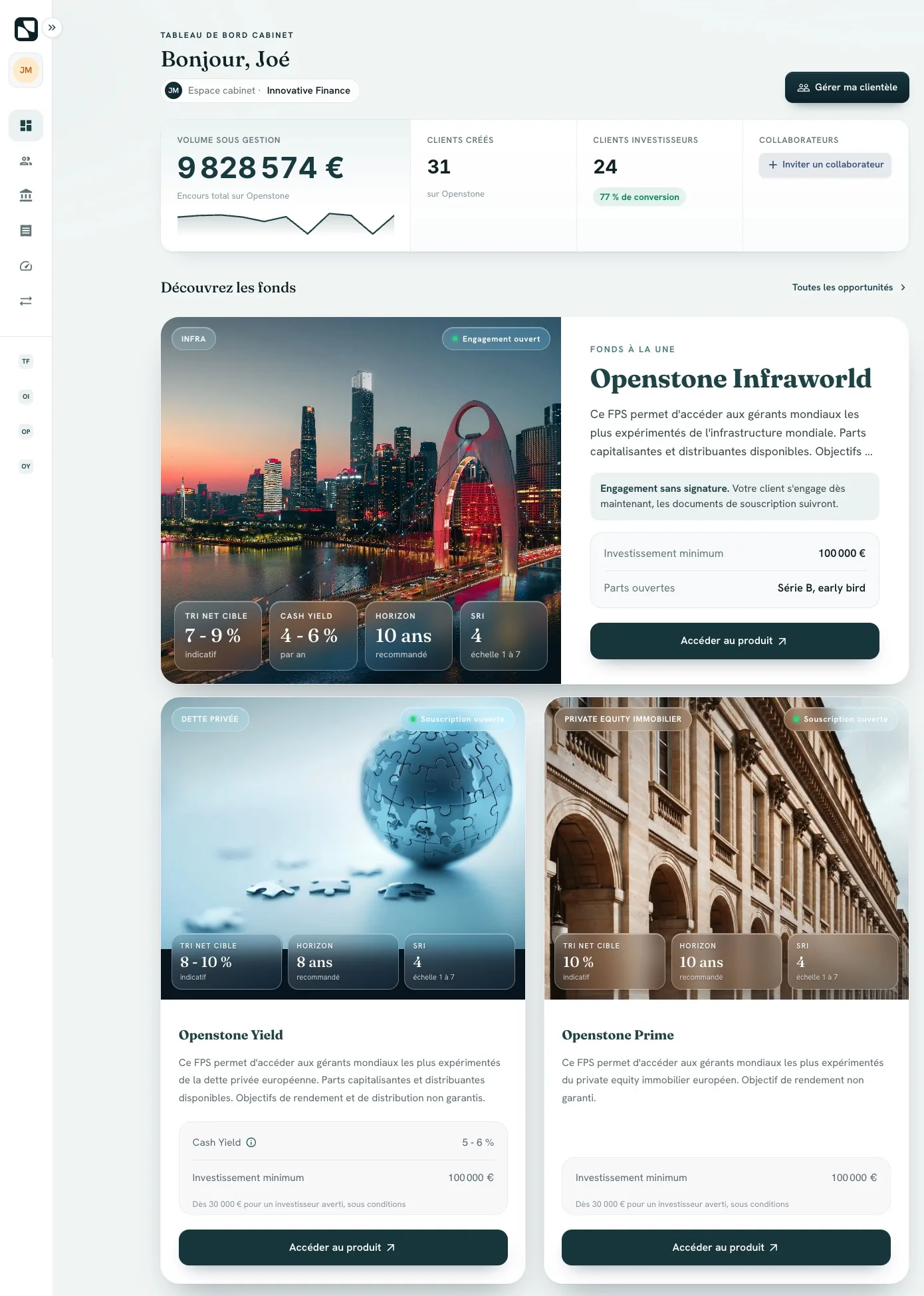
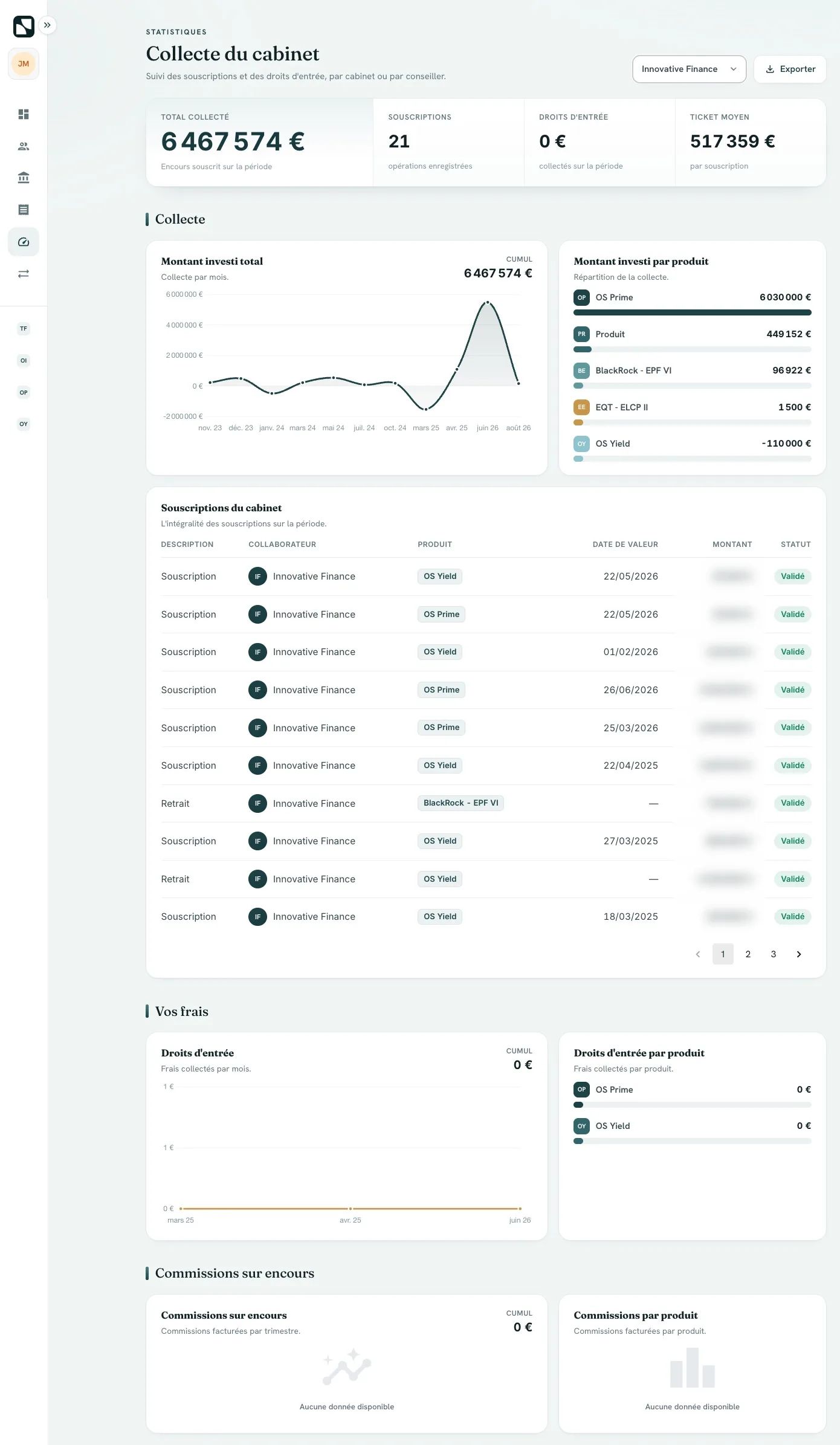
Advisor firms invite colleagues with roles, organise clients in lists and move a client book from one advisor to another without touching past contracts. Advisors subscribe on behalf of individual or company clients, directly or through life insurance, then follow invested capital, valuations recomputed whenever a share price changes, performance over time, distributions received, position statements and their fee invoices.
ComplianceOnboarding, identity and signature
A completeness check lists exactly what is missing from an individual or company file before a subscription can go ahead. Identity verification, electronic signature, post-signature documents and payments run in the same flow, for individuals and for companies with their tax declarations.
DataThe feed to aggregators and insurers
Once an advisor firm has signed its authorisation, its clients’ positions and transactions are exported in the market’s standard format, every night or on the third of each month, by secure transfer, email or download. Seven rules run first: valuations consistent with quantities and prices, gross minus fees equal to net, references intact, identities complete, no future dates, positive amounts, valid security codes. A single failure stops the export.
Process automationThe flow with the fund administrator
The administrator’s file is imported and each line is matched to a subscription in four passes, from the contract number down to name and amount. Lines with no match, subscriptions missing from the file and pending tickets are each set aside. A person confirms which differences to apply. Capital commitments become subscriptions when they are called and settled.
Process automationDistributions, statements and fees
Distributions are imported per share class, calculated on the shares held at period end, previewed and published to every investor with their yield. Quarterly position statements consolidate every top-up, fee and distribution, on the web and in PDF. Entry and management fees, advisor invoices and distributor commissions are calculated and sent without manual work.
SalesLeads and the CRM
Every form, webinar, email and platform visit feeds a gate in front of the CRM: each lead is verified, enriched from the company register, scored on profile and behaviour, then pushed, held for review or rejected with a reason. Hot leads alert their owner. Assets under management per advisor firm update its deal in the CRM on their own.
Brand and contentThe document line
Decks, webinars, newsletters, landing pages, analysis notes and regulated fund reports come out of one production system, on brand and with the required disclaimers locked in. The team supplies figures and a brief, then reviews.
ComplianceThe security file
The platform’s practices are mapped against ISO 27001, DORA, NIS2 and GDPR, with written policies and a remediation plan per framework: the answers a private bank asks for before it signs.
Tools and stackRuby on RailsReactTypeScriptPostgreSQLNode.jsHubSpotBrevoLivestormYousignSlack
The brand system
Colours
- Teal 500#264C51Primary: headings, actions
- Teal 900#16343ADeep surfaces
- Ink#10242AText, replaces black
- Teal 050#EEF4F4Light surfaces
- Peach#FFDABFAccent on dark
- Positive#1F8F63Positive values
Typefaces
- AaOpenstone 0123456789
- AaOpenstone 0123456789
- AaOpenstone 0123456789
Shapes18 px cards, 12 px fields and chips
- Whitespace is elegance, not emptiness. Every element needs room.
- Guide the eye with intention: one clear story per composition.
- Every element justifies its presence. Clarity over decoration.
Openstone design system: the platform tokens and the brand reference shared with the document line.

Your company at the same stage?
Tell us what you want to solve. We read every request ourselves.
Request an introduction